

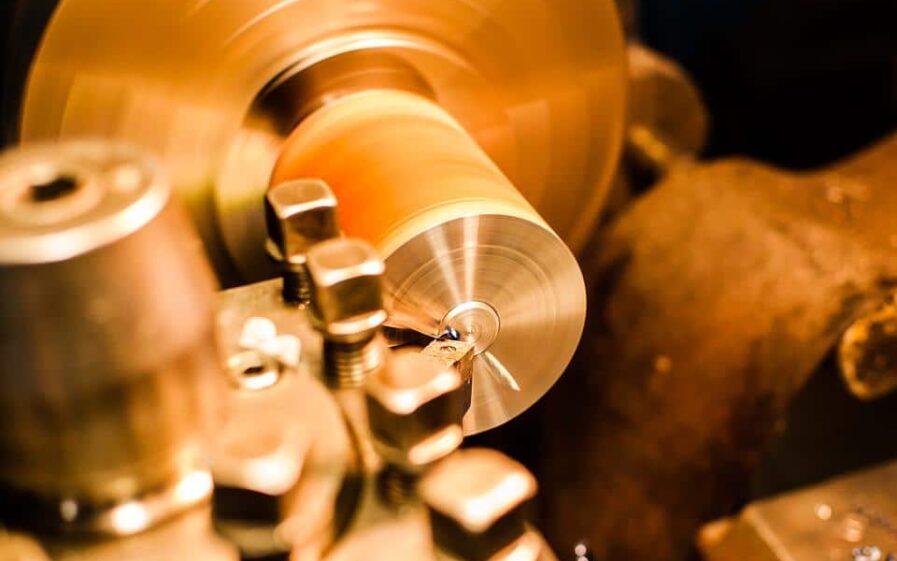
CNC machining services play a crucial role in modern metal fabrication, particularly when it comes to manufacturing large volumes of parts. Read on to find out more about CNC machining, how it works and the different types of CNC machining operations.
Are you looking for CNC machining services in Wiltshire? Contact our team today to request a free quote or discuss how we can help meet your CNC machining needs.
What’s on this page
- What is CNC machining?
- How does CNC machining work?
- Types of CNC machining services
- How much do CNC machining services cost?
- CNC machining uses and applications
- CNC machining services in Wiltshire and beyond
What is CNC machining?
CNC (computer numerical control) machining is a metal fabrication process in which pre-programmed computer software controls the actions of machining tools. Rather than using an engineer to operate the tools, the machine follows a coded set of instructions from a CAM or CAD file. The code dictates everything from the spindle speed and feed rate to the movement of the cutting head. The machine then automatically processes a stock piece of material to meet the specifications.
The CNC process can be used to control a range of machinery including lathes, mills and punch presses. It effectively means complex, multitool machining operations can be performed with just a single set of prompts. Previously labour-intensive processes become much faster and simpler, helping to boost workshop productivity and efficiency.
You can read more about the advantages of CNC machining on our website.
How does CNC machining work?
The movement of a CNC machine is determined by a digital set of instructions that are usually generated by CAD/CAM software. The software doesn’t actually control the machine itself, but rather translates the instructions into a language the CNC machine can read and follow. The most widely used CNC programming language is known as G-code.
There are various types of CNC machining operations but they all broadly work in the same way. Here’s a brief overview of a typical CNC machining process, from initial design through to fabrication of the final part.

1. Designing a CAD model
The process usually begins with designing a 2D or 3D model of the required part using CAD software. The model determines the dimensions and properties of the final component or prototype. At Knees Engineering, our team of Wiltshire-based engineers use Solidworks – the trusted industry standard in design and engineering – to produce detailed technical drawings for a multitude of CNC machining projects.
2. Converting the CAD model into a CNC readable format
Next, the CAD design is converted by CAM software into a digital CNC program the machine can understand. Some software comes as a CAD-CAM package, thereby enabling the process to flow seamlessly from one stage to the next.
The CNC program is essentially a digital set of coordinates that determine the movements of the machine across the workpiece. Firstly, the CAM software checks the model for errors and chooses the right parameters. It also looks at the nesting to minimise material wastage. All of this information is then converted into a G-code or M-code for the CNC machine to follow.
3. Setting up the machine
Although CNC machines operate automatically, an engineer still needs to prepare the machine before any work can begin. The workpiece must be secured to the worktable and the relevant tooling will need to be attached to the machine. Once the initial setup is complete, the engineer has one last check of the machine program before starting the operation.
4. Performing the operation
After the final checks are complete and the machine is ready, the operator launches the program. This prompts the machine to begin the operation and create the fabricated part in line with the original CAD drawing.
In some cases, the machined part will then need to undergo a specialist finishing treatment. Depending on the requirements, these can improve the hardness, aesthetics or corrosion resistance of your fabricated component. Explore our range of finishing options here.
Types of CNC machining services
CNC machining can encompass a wide range of machining processes. Traditionally, however, CNC machining refers to a select few automated manufacturing operations including milling, turning and drilling.
- Milling – Milling is a machining process that uses a multi-point cutting tool to remove material from the workpiece. The cutting tool rotates to progressively chip away the material and produce a custom-designed component. CNC milling machines can create parts with exceptional accuracy, making them ideal for jobs where precision is key.
- Turning – Unlike milling, the turning process sees the workpiece rotate as opposed to the cutting tool. A turning lathe secures and rotates the workpiece while a single-point cutting tool removes portions of the material to create the component. CNC turning is much faster than manual turning, which requires the lathe to be turned by hand.
- Drilling – CNC drilling uses rotating multi-point drill bits to produce holes or other shapes at a set diameter and length in the workpiece. The machine feeds the drill bit perpendicularly or angularly to the workpiece to produce the hole(s). Drilling is used for a variety of operations including counterboring, countersinking, tapping and reaming.
You can read more about the different types of CNC machines in our article ‘A guide to CNC machines’.

A lathe uses a single-point cutting tool to remove portions of metal
How much do CNC machining services cost?
If your project requires CNC machining, you’ll naturally want some idea of how much to budget. However, CNC machining costs are not always straightforward and many factors affect the final price. These include:
- Labour and setup
- Machine costs
- Material costs
- Time
- Change of tools and wear.
Pricing CNC machining services can be more challenging than costing other services such as laser cutting. At Knees Engineering we offer competitive pricing across all of our fabrication services and aim to provide a personalised quote within 48 hours. So if you’re looking for cost-effective, high-quality CNC machining services in Wiltshire or the surrounding areas, do give us a call.
CNC machining uses and applications
CNC machines are used to manufacture parts for a wide range of industries. They’re especially useful in sectors that rely on metal removal or those that require precision-fabricated components.
Some of the most common uses and applications of CNC machining are listed below.
- Automotive – CNC machines are used to carve complex parts such as shafts, gears, valves and various other components from raw metal
- Medical – The tight tolerances of CNC machines are vital for machined medical components like surgical instruments, orthotics and electronic enclosures
- Oil and gas – This is another industry that relies on the high precision of CNC machines. CNC milling machines are often used to fabricate parts such as valves, pistons and cylinders for pipelines and refineries
- Aerospace – Aerospace parts like engine mounts, fuel flow components, landing gear components and fuel access panels are all manufactured using CNC machines. Again, the high precision of CNC machining is essential for ensuring safety.
Over the years we’ve machined parts for all sorts of industries. You can read more about the industries we work with on our website or get in touch to speak to one of the team.

CNC machines are often used to manufacture parts for the oil and gas industry
CNC machining services in Wiltshire and beyond
At Knees Engineering we offer high-quality CNC machining services to businesses across Wiltshire and throughout the rest of the UK.
Our factory has full facilities for CNC milling, turning and drilling, allowing us to cater for one-off prototypes as well as small, medium and high volume production runs. We can produce high-quality parts and components in various materials, including aluminium, stainless steel, copper, brass, and plastic.
If you’re looking for fast and reliable CNC machining services, you’ve come to the right place. Contact our team today to discuss your needs and request a free quote. And don’t forget to visit our news page for more CNC machining and metal fabrication guides.