Metal finishing services
If your customised part requires a specific type of finish, we can call on our trusted network of external specialists to perform a range of processes.

From powder coating and polishing to galvanising and electroplating, our metal finishing services cater for all kinds of projects and industries.
We can also arrange for any component assembly required, or provide any other professional post-fabrication service that is necessary to complete a project.
We work with a wide range of businesses both locally in West Wiltshire and further afield. Simply get in touch to find out more about our metal finishing services or to discuss the types of finishes available.

Our powder coating service is ideal if your end part or product requires a durable and attractive finish. We also offer an extensive range of powder colours in various gloss levels.

Our spray painting service is suitable for all types of internal and external metalwork, making it a popular and economical solution for a wide variety of applications and industries.

Our shot blasting service is ideal for cleaning metal surfaces and removing old paint, rust and other contaminants. We can also help you determine the most suitable technique for your needs.

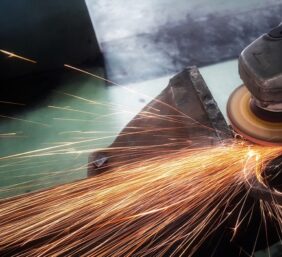
We can perform a variety of grinding and deburring processes to eliminate unwanted burrs and create a smooth, consistent surface finish that meets your specific requirements.

We can shine, smooth and remove imperfections from all types of metals. Our team can also produce different styles of finish to suit your specific requirements, whether that’s a mirror-bright shine or something more subtle.

If you’re looking to deburr, polish or remove surface contaminants after manufacturing, our vibratory finishing and tumbling service will help you to achieve the perfect finish.

If your metal item needs to be corrosive-resistant, we can arrange for it to be galvanised by one of our trusted third-party suppliers. They can achieve a flawless finish that will ensure your metal item is protected for many years to come.

As part of our comprehensive range of metal finishing services, we can arrange for your metal part to be anodised. Its versatility and effectiveness makes anodising a popular treatment method with businesses from various industries.
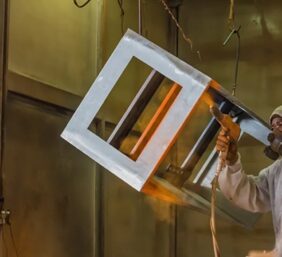
Often used as an alternative to liquid paint, powder coating provides a chemical and scratch-resistant surface that’s both durable and attractive. Dry colour powders are applied using an electrostatically-charged spray before being ‘baked’ in a special oven. The heat cures the coating to create a hard finish that’s much tougher than traditional paint.
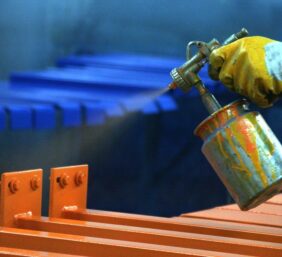
Wet paint spraying is the process of applying liquid paint to an item for finishing. After the surface has been cleaned and prepared, a spray or pump is used to apply the liquid paint evenly until the material is coated to the required thickness.
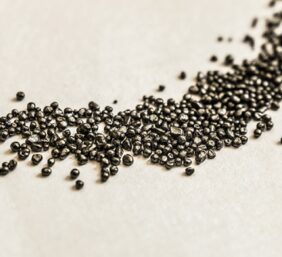
Shot blasting is an abrasive cleaning process that’s used to remove contaminants and surface debris from a material. Abrasive shot media are placed into a blast wheel which then propels them at high velocity against the material to be finished.
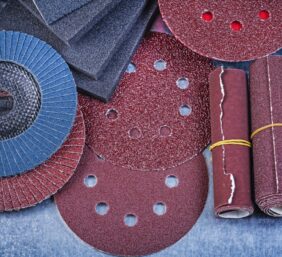
Abrasive belts or discs are used to remove oxidation, scratches and other imperfections from the surface of a metal, enhancing its overall quality and appearance.
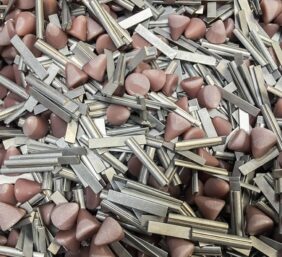
Designed to remove rough edges and defects, vibratory finishing and tumbling are used to treat a large number of workpieces in one go. The workpieces are first placed into a vibratory tumbler along with specially shaped abrasive media pellets. The machine then vibrates, causing powerful collisions between the media and the workpiece to achieve a smooth finish.
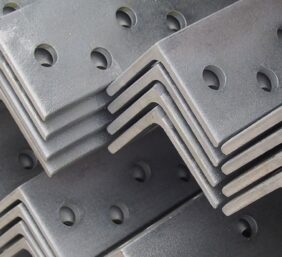
Galvanising is a finishing process in which a metal (often steel) is coated with a layer of molten zinc. Zinc is renowned for its resistance to rust and corrosion, making galvanising ideally suited to items that will be exposed to rain and adverse weather.
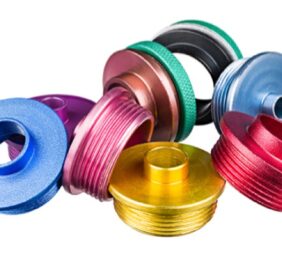
Anodising is a technique in which a material, usually aluminium, is submerged in an electrolyte solution that has a current running through it. The process results in a thick oxide coating forming over the metal, increasing its corrosive-resistant capabilities.
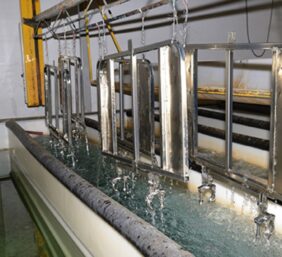
The electroplating process uses an electric current to coat one metal with another. This acts as a protective barrier and helps to protect the metal against corrosion and environmental conditions. It can also be used to harden the surface of the substrate material and, in some cases, improve its electrical conductivity.
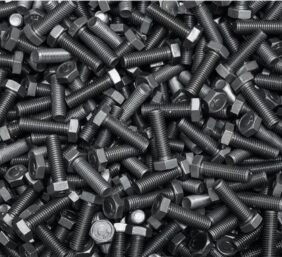
Chemical blackening is the process of adding a black oxide finish to a metal part. It provides no dimensional change and can be used to minimise light glare, protect against corrosion and improve the decorative finish.
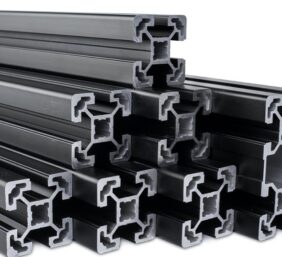
Hard anodising is an electrolyte process in which a thick oxide coating is added to a metal, usually aluminium and its alloys. The technique creates a hard protective layer which increases the metal’s resistance to wear and corrosion.
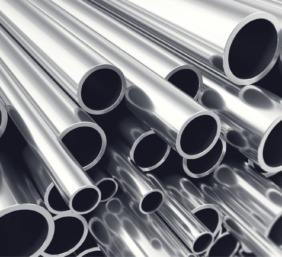
Effectively the reverse of electroplating, electropolishing uses an electrochemical solution to remove the outer skin of a metal part. This process strips away imperfections and burrs to leave a smoother and more uniform surface.
At Knees Engineering we only work with third parties who share our passion for quality and superior service. This means you can be confident that any external finishing will always meet our exceptionally high standards.
So whether your product would benefit from spray painting, powder coating, anodising or galvanising, we can advise you on the most suitable and cost-effective treatment to meet your specifications.
We can also arrange for any component assembly required or provide any other professional post-fabrication service that’s necessary to complete your project.
Contact us today to find out more about our metal finishing services or to discuss the types of finishes available.
What is metal finishing?

It often involves applying a type of coating to the metal’s surface during the final stage of production to alter its appearance or achieve a certain property. This can take various forms and includes processes such as powder coating, wet spray painting, galvanising, electroplating and hard anodising.
Metal finishing also encompasses a variety of cleaning, deburring and polishing techniques. Examples include shot blasting, grinding, vibratory finishing and electropolishing.
Rather than adding something to the workpiece, these techniques seek to reshape and improve it by removing imperfections such as burrs, scratches and contaminants from the surface.
What are the benefits of metal finishing?
Why choose Knees Engineering?